
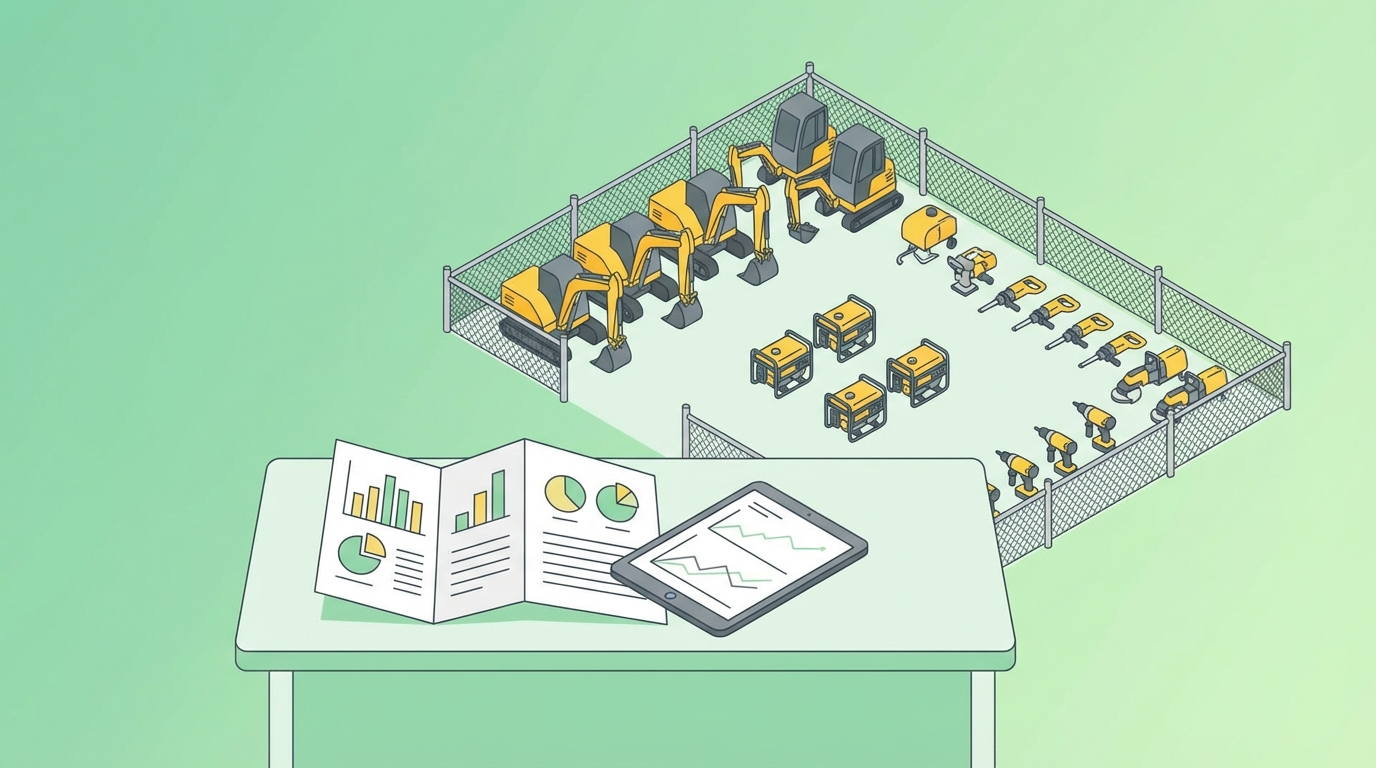
An equipment rental business plan details your fleet strategy, target market, pricing model, startup investment, and growth roadmap. Whether you are renting construction equipment, tools, or general industrial gear, this document maps the path from initial investment to profitable operations.
Equipment rental is a capital-intensive business. A single mini excavator costs more than an entire inventory of party supplies. That capital requirement makes the business plan more than an academic exercise - it is the document that determines whether you get financing, how much inventory you can afford on day one, and whether your pricing covers depreciation, maintenance, and debt service before you earn a dollar of profit.
This guide walks through every section of an equipment rental business plan, with the dollar figures, utilization benchmarks, and financial projections specific to the equipment rental industry in 2026.
Why You Need an Equipment Rental Business Plan
Banks and equipment financing companies require a business plan before approving loans for heavy equipment purchases. A $50,000 skid steer is not a credit card purchase. Lenders want to see that you understand the market, have realistic revenue projections, and can service the debt even during slow months.
Beyond financing, the business plan forces you to validate your market assumptions before committing capital. How many contractors operate in your service area? What equipment categories are underserved? Can your target market support the rental rates you need to cover depreciation and maintenance? These questions have quantifiable answers, and the planning process surfaces problems that are cheaper to fix on paper than after you have signed a lease and purchased $200,000 in equipment.
The plan also sizes your fleet investment correctly. New operators frequently overbuy heavy equipment because the per-unit economics look attractive on a spreadsheet. A business plan with realistic utilization rates - not the 80% figures equipment dealers quote, but the 35-45% rates typical for Year 1 - prevents you from tying up capital in assets that sit idle three days out of five.
Executive Summary
The executive summary is a one-to-two-page overview that lenders read first and sometimes read exclusively. Write it last, after completing every other section, but place it at the front of the document.
Your executive summary should cover:
- Business concept - What you rent, to whom, and how (delivery, pickup, or both)
- Equipment categories - The specific types of equipment in your initial fleet (light tools, earthmoving, aerial, or a combination)
- Service area radius - The geographic territory you will serve, typically 30-60 miles for equipment delivery
- Startup investment - Total capital required and how it breaks down between equipment, facilities, and working capital
- Year 1 revenue target - A realistic top-line number based on fleet size, rental rates, and utilization assumptions
- Competitive positioning - What separates you from existing rental yards in the area, whether that is specialization, delivery speed, online booking, or pricing
Keep the language direct. Lenders review dozens of business plans. A concise summary that leads with the numbers and explains the opportunity in plain terms gets read. A five-page narrative about the future of the rental industry gets skimmed.
Market Analysis
Your market analysis identifies who rents equipment in your area, what they rent, and who currently serves them. This section proves that enough demand exists to support another rental operation.
Target Customers
Equipment rental customers fall into four primary segments, each with different rental patterns and equipment needs:
- General contractors - The largest segment. They rent equipment for specific job phases rather than owning everything. A framing contractor needs a skid steer for site prep but not every week. Repeat customers with predictable seasonal patterns.
- Homeowners and DIYers - Weekend and project-based rentals. Pressure washers, concrete mixers, stump grinders, and floor sanders. Lower ticket value per rental but high volume and minimal negotiation on rates.
- Municipalities and government agencies - Seasonal needs for road maintenance, storm cleanup, and public works projects. Longer rental periods, formal procurement processes, and reliable payment.
- Event and production companies - Generators, lighting towers, portable power distribution. Specialized needs with premium pricing tolerance when deadlines are non-negotiable.
Local Competitor Landscape
Map every rental yard within your service radius. Visit their locations, check their online inventory, and call for quotes on common items. Document what they stock, their daily and weekly rates, whether they offer delivery, and how they handle bookings. National chains like United Rentals and Sunbelt operate on scale and price competitiveness. Independent operators compete on service speed, specialization, and local relationships. Your positioning depends on where the gaps are.
Seasonal Patterns
Construction activity drives equipment rental demand, and construction is seasonal in most markets. Spring through fall is peak season, with the strongest months typically being April through October. Winter months see reduced demand for earthmoving and outdoor equipment, though indoor renovation tools, heaters, and generators maintain steadier year-round rental activity. Your financial projections must account for this seasonality rather than averaging revenue evenly across twelve months.
Equipment Selection and Fleet Sizing
Your equipment fleet is your inventory, your largest capital expenditure, and the primary driver of your revenue. Choosing the right categories and quantities determines whether the business is profitable or underwater.
Equipment Categories to Consider
Most successful independent equipment rental businesses start with light and medium equipment, then add heavy categories as revenue and customer demand justify the investment.
| Category | Examples | Purchase Cost | Daily Rate | Weekly Rate |
|---|---|---|---|---|
| Light equipment | Pressure washers, generators, compressors | $500 - $3,000 | $50 - $150 | $200 - $500 |
| Power tools | Concrete saws, jackhammers, rotary hammers | $300 - $2,000 | $40 - $125 | $150 - $400 |
| Earthmoving | Mini excavators, skid steers, compact loaders | $25,000 - $80,000 | $250 - $600 | $900 - $2,200 |
| Aerial | Boom lifts, scissor lifts, personnel lifts | $15,000 - $50,000 | $200 - $500 | $700 - $1,800 |
| Compaction | Plate compactors, rollers, rammers | $1,500 - $8,000 | $75 - $200 | $250 - $650 |
| Concrete | Mixers, vibrators, power trowels, saws | $500 - $5,000 | $50 - $175 | $175 - $550 |
Recommended Starter Approach
Start with 10-20 items concentrated in light and medium categories. A fleet of pressure washers, generators, concrete tools, compaction equipment, and one or two mini excavators gives you broad appeal to both contractors and homeowners without requiring $300,000 in startup capital. Light equipment rents frequently, costs less to maintain, and depreciates more slowly relative to its rental income than heavy equipment.
Add heavy equipment - a second excavator, a skid steer, aerial lifts - only after you have consistent demand data from your first six to twelve months. Buying a $60,000 scissor lift because one customer asked about it is how equipment rental businesses burn through their working capital.
Startup Costs
Equipment rental requires more startup capital than most service businesses. The table below breaks down the realistic cost ranges for launching an independent equipment rental operation.
| Expense Category | Low Estimate | High Estimate | Notes |
|---|---|---|---|
| Equipment fleet (10-20 items) | $50,000 | $250,000 | Mix of new and used; can lease to reduce upfront cost |
| Yard or warehouse lease | $2,000/mo | $8,000/mo | Depends on market; need space for storage, loading, minor repairs |
| Delivery truck and trailer | $15,000 | $40,000 | Used flatbed truck or pickup with equipment trailer |
| Insurance | $5,000/yr | $15,000/yr | General liability, inland marine, auto, workers comp |
| Business registration and permits | $1,000 | $3,000 | LLC filing, local business license, environmental permits if applicable |
| Website and booking software | $59/mo | $99/mo | Online booking, inventory tracking, payment processing |
| Maintenance shop setup | $5,000 | $15,000 | Basic tools, diagnostic equipment, parts inventory, wash station |
| Initial marketing | $3,000 | $10,000 | Google Ads, signage, Google Business Profile setup, business cards |
| Working capital | $15,000 | $30,000 | Covers 3-6 months of operating expenses before revenue stabilizes |
| Total estimated startup | $100,000 | $375,000 | Range depends on fleet mix and whether you buy or lease |
The wide range reflects a fundamental decision: do you start with a light-equipment operation for $100,000-$150,000 or go in with heavy equipment from day one at $250,000+? Operators who start lean and reinvest rental income into fleet expansion have a lower failure rate than those who finance a large fleet before proving their market. Use our free startup cost calculator to estimate your total investment based on your fleet mix.
Revenue Projections
Revenue in equipment rental is a function of three variables: fleet size, rental rates, and utilization. Getting the utilization assumption right is the difference between a business plan that reflects reality and one that leads to a cash crisis six months after launch.
Rate Structures
Equipment rental uses tiered duration pricing. The standard structure is daily, weekly (typically 3x the daily rate), and monthly (typically 3x the weekly rate). Longer commitments give the customer a lower effective daily rate while guaranteeing you sustained revenue and higher total dollars per rental cycle.
Utilization Targets
Utilization measures the percentage of time your equipment is on rent versus sitting in the yard. Industry benchmarks for independent operators:
- Year 1: 35-45% utilization. You are building a customer base, learning which equipment rents and which sits, and dealing with the operational learning curve.
- Year 2: 45-55% utilization. Repeat customers, refined inventory, and word-of-mouth referrals increase rental days.
- Year 3: 55-65% utilization. Mature operations with an established customer base and optimized fleet mix.
National chains target 65-70% utilization with massive fleets and sophisticated pricing algorithms. An independent operator hitting 60% by Year 3 is running a strong business.
Revenue Per Asset Calculation
Take a mini excavator purchased for $45,000 with a daily rate of $350 and a weekly rate of $1,050. At 40% utilization in Year 1, that excavator rents roughly 146 days per year. Assuming a mix of daily and weekly rentals averaging $300 per rental day, annual revenue from that single unit is approximately $43,800. Subtract maintenance, insurance allocation, and depreciation to determine net contribution.
Ancillary Revenue
Equipment rental businesses generate meaningful secondary revenue from sources that have minimal incremental cost:
- Delivery and pickup fees: $75-$250 per trip depending on distance and equipment size. Many customers expect delivery for heavy equipment.
- Damage waivers: 10-15% of the rental rate. Reduces your claims processing and gives the customer peace of mind.
- Consumables and supplies: Saw blades, drill bits, fuel, hydraulic fluid. Small per-transaction revenue that adds up across hundreds of rentals.
- Operator training or referrals: Some equipment requires certified operators. Connecting customers with operators earns referral fees or premium rates.
Operations Plan
Your operations plan describes how the business runs day to day. Lenders want to see that you have thought through logistics, not just financials.
Delivery and Pickup Logistics
Most equipment rental customers expect delivery, especially for items over 500 pounds. Define your delivery radius (typically 30-60 miles), delivery vehicle requirements (flatbed truck, equipment trailer, or both), and scheduling process. Same-day delivery capability is a competitive advantage against larger competitors who often require 24-48 hour lead times. Build delivery fees into your pricing model so they cover the cost of fuel, driver time, and vehicle wear.
Maintenance and Inspection Schedules
Equipment maintenance is not optional - it is a core business function. Every item should be inspected on return, serviced on a regular schedule based on rental hours or calendar time, and documented with maintenance records. A pressure washer that fails on a job site costs you the rental refund, the customer relationship, and potentially a liability claim. Budget 5-10% of equipment value annually for maintenance and repairs.
Rental Agreements and Damage Documentation
Every rental needs a signed agreement covering rental period, rates, damage responsibility, insurance requirements, and authorized operators. Photograph or video equipment condition at checkout and return. Digital documentation through your equipment rental software creates timestamped records that protect you in damage disputes.
Inventory Tracking
Know where every piece of equipment is at all times - on rent, in the yard, in maintenance, or in transit. Manual tracking with spreadsheets breaks down once you exceed 15-20 items. Rental management software with real-time inventory status prevents double-bookings, identifies underperforming assets, and generates utilization reports that drive fleet expansion decisions.
Marketing Strategy
Equipment rental marketing is local and intent-driven. Your customers are searching for specific equipment when they need it, not browsing rental options for entertainment.
Google Business Profile
Your Google Business Profile is the single most important free marketing asset. Contractors searching "mini excavator rental near me" see Google Business Profile results before organic listings. Complete every field, add photos of your equipment and yard, post regularly, and actively collect reviews from customers. A profile with 30+ reviews and a 4.8 rating generates more calls than a $5,000 ad budget.
Contractor Partnerships
Identify the 20-30 most active general contractors in your service area. Visit job sites, attend local contractor association meetings, and offer preferred pricing for volume commitments. A single contractor who rents an excavator 40 weeks per year is worth more than 200 individual homeowner rentals. These relationships take months to build but generate the recurring revenue that stabilizes your cash flow.
Equipment-Specific Landing Pages
Create individual pages on your website for each equipment category. A page targeting "scissor lift rental in [your city]" with specifications, rates, photos, and an online booking option ranks in local search results and converts visitors who are ready to rent. Generic "we rent equipment" pages do not rank for the specific searches your customers are typing.
Website with Online Booking
A professional website with online booking capability separates you from competitors still operating on phone calls and handwritten contracts. Customers check availability, see rates, and reserve equipment at 10 PM on a Sunday night - when your office phone is not ringing. Rental booking software handles the reservation, collects payment or deposit, and sends confirmation emails without staff involvement.
Trade Show Presence
Local home shows, contractor expos, and construction trade events put you in front of your target audience. Bring a few pieces of equipment, demonstrate them, and collect contact information. One trade show can generate a year's worth of contractor leads that would take months to develop through cold outreach.
Let Reservety build your equipment rental website
Our concierge team creates your complete booking site during the free trial - equipment catalog, availability calendars, online payments, and rental agreements included.
Start Free TrialFinancial Projections
Your financial projections translate fleet size, utilization rates, and operating expenses into a three-year profit and loss statement. This is the section lenders scrutinize most carefully.
Year 1-3 Profit and Loss Overview
For an operation starting with $150,000 in equipment (15 items across light, medium, and one heavy category):
| Line Item | Year 1 | Year 2 | Year 3 |
|---|---|---|---|
| Rental revenue | $120,000 | $195,000 | $280,000 |
| Delivery and ancillary revenue | $18,000 | $30,000 | $42,000 |
| Total revenue | $138,000 | $225,000 | $322,000 |
| Equipment depreciation | ($22,500) | ($26,000) | ($30,000) |
| Facility lease | ($42,000) | ($43,000) | ($44,000) |
| Maintenance and repairs | ($12,000) | ($16,000) | ($20,000) |
| Insurance | ($10,000) | ($11,000) | ($12,000) |
| Marketing | ($12,000) | ($10,000) | ($10,000) |
| Software and admin | ($3,000) | ($3,000) | ($3,000) |
| Labor (1-2 staff) | ($36,000) | ($48,000) | ($60,000) |
| Delivery vehicle costs | ($8,000) | ($10,000) | ($12,000) |
| Loan payments | ($18,000) | ($18,000) | ($18,000) |
| Net income | ($25,500) | $40,000 | $113,000 |
Year 1 typically runs at a loss as you build the customer base and absorb startup costs. Breakeven usually falls somewhere in the second half of Year 1 or early Year 2 for well-executed operations. By Year 3, a fleet that has grown to 20-25 items at 55-65% utilization should generate six-figure net income.
Break-Even Analysis
Calculate your monthly fixed costs (lease, insurance, loan payments, base labor) and determine how many rental days per month you need to cover them. For the example above, monthly fixed costs run approximately $9,000. If your average rental generates $150 in daily revenue, you need 60 rental-days per month to break even - roughly 4 rental-days per item per month with a 15-item fleet. That translates to 13% utilization as the break-even floor, which is achievable within the first few months of operation.
Equipment Depreciation Considerations
Equipment loses value whether it is rented or sitting in the yard. Straight-line depreciation over 5-7 years for tax purposes, but track market value depreciation separately for fleet replacement planning. A mini excavator with 2,000 rental hours retains more resale value than one with 4,000 hours. Understanding the depreciation curve for each equipment category helps you time resale and replacement to maximize the return on each asset.
When to Expand the Fleet
Add new equipment when existing assets in a category consistently exceed 60% utilization for three consecutive months. If your two mini excavators are booked 18+ days per month, a third excavator will rent. If a category runs below 30% utilization for six months, consider selling that asset and redirecting the capital to higher-performing categories.
Common Mistakes in Equipment Rental Business Plans
These are the errors that sink otherwise reasonable business plans:
- Buying too much heavy equipment upfront. A $250,000 fleet of excavators and boom lifts looks impressive until you realize utilization is 20% in Year 1. Start with light and medium equipment that rents frequently and add heavy categories once demand is proven.
- Underestimating maintenance costs. Equipment breaks. Budget 5-10% of fleet value annually for maintenance and set aside a repair reserve. A $2,000 hydraulic repair on a mini excavator is not an emergency when you have planned for it.
- Not tracking utilization by individual asset. Average fleet utilization masks the problem. One excavator at 70% utilization and another at 15% averages to 42.5%, which looks acceptable. Asset-level tracking reveals that the second excavator should be sold or replaced with something that rents.
- Skipping delivery logistics planning. Most equipment customers expect delivery. If you have not budgeted for a delivery vehicle, fuel, and driver time, you either lose sales to competitors who deliver or absorb the cost and erode margins.
- Pricing without knowing competitor rates. Call every rental yard in your area and get quotes before setting your rates. Pricing 20% above the market because your equipment is newer only works if customers know your equipment is newer. Start competitive and adjust as your reputation grows.
- Ignoring equipment depreciation in projections. A business plan that shows $150,000 in profit but does not account for the $30,000 annual decline in fleet value overstates actual returns by 20%. Include depreciation as a real cost even though it is a non-cash expense.